01/06/2026 8:47 PM
Choosing the right packaging paper types determines 70% of your final product quality — yet it’s the part most first-time buyers overlook. When placing your first print order, the first question you’ll hear is: should we use Duplex, Ivory, Kraft, or Couche?
Picking the wrong packaging paper types can make your product look cheap, damage easily in transit, or inflate costs by 30–50% with no real benefit. Getting it right from the start, on the other hand, gives you packaging that’s beautiful, durable, and cost-efficient.
This guide draws on over 20 years of paper packaging experience at Shun Fa to walk you through the 4 most common packaging paper types today — and exactly which one to choose for your product.
When most people look at a beautiful box, they notice the design, the colors, or the printing technique. But industry insiders know: the paper itself is what truly matters.
The packaging paper types you choose directly affect 4 key factors:
Understanding the characteristics of each of the packaging paper types is how you take control of all four — right at the production planning stage.
Characteristics: Duplex paper has two distinct sides — one white (often coated) for printing, the other gray or light brown. It’s the most widely used among packaging paper types in Vietnam thanks to its affordable price and good stiffness.
Common weights: 250 – 500 gsm
Pros:
Cons:
Best for:
Characteristics: Ivory paper has both sides white, but only one side is coated for printing. The surface is smooth and bright, giving a noticeably better print finish than Duplex. This is one of the packaging paper types most often chosen by mid-range cosmetics brands.
Common weights: 230 – 400 gsm
Pros:
Cons:
Best for:
Characteristics: Kraft paper has a distinctive natural brown color, made from unbleached wood pulp. It’s the fastest-rising option among packaging paper types in Vietnam, driven by green consumer trends and minimalist design aesthetics.
Common weights: 80 – 400 gsm
Pros:
Cons:
Best for:
Characteristics: Couche paper is coated with a clay layer that creates an ultra-smooth, glossy (or matte) surface. Among all packaging paper types, this one delivers the best photographic print quality.
Common weights: 80 – 350 gsm
Pros:
Cons:
Best for:
| Criteria | Duplex | Ivory | Kraft | Couche |
|---|---|---|---|---|
| Cost | Lowest | Medium | Medium | Highest |
| Print quality | Decent | Good | Fair | Excellent |
| Rigidity | High | High | High | Low (needs backing) |
| Premium feel | Low | Medium–High | Natural, raw | High–Very high |
| Eco-friendliness | Medium | Medium | High | Medium |
| Best for | Dry food, pharma | Cosmetics, sweets | F&B, organic, EC | Gifts, luxury cosmetics |
Cosmetics:
Food & Beverage:
Pharmaceuticals:
E-commerce:
Gifts & Souvenirs:
Beyond paper material itself, there are 5 practical factors to weigh when picking among packaging paper types for your product:
Which packaging paper type is the cheapest? Duplex is the most affordable among common packaging paper types. At 300gsm, it’s the most economical choice for mass-produced paper boxes.
Which packaging paper type is the most eco-friendly? Kraft paper is the most eco-friendly thanks to minimal chemical processing and easy recyclability. For verified sustainability, choose Kraft paper with FSC certification.
Can multiple packaging paper types be combined in one product? Yes. The most common example is luxury rigid boxes: the box body uses 1.5–2mm chipboard, wrapped in Couche paper on the outside for sharp print, and lined with Ivory paper inside for a clean interior finish.
What paper weight is right for cosmetics boxes? For standard cosmetics boxes, Ivory 300–350gsm is the industry standard. Luxury rigid boxes use 1.2–2mm chipboard wrapped in Couche 128–157gsm.
Which packaging paper type is best for exports? Export products need durability and resistance to long-haul shipping. Duplex 350–450gsm or Kraft 400gsm are safe choices. For international certification, choose FSC-certified paper.
Are Ivory paper and Bristol paper the same? No. Bristol paper has smooth surfaces on both sides but no coating; it’s used for business cards and thin brochures. Ivory is heavier, has one coated side, and is designed for paper box production.
The theory of packaging paper types is one thing — but real-world paper selection depends on factors no single guide can fully cover: product weight, shipping conditions, storage environment, order quantity, post-printing finishing, and more.
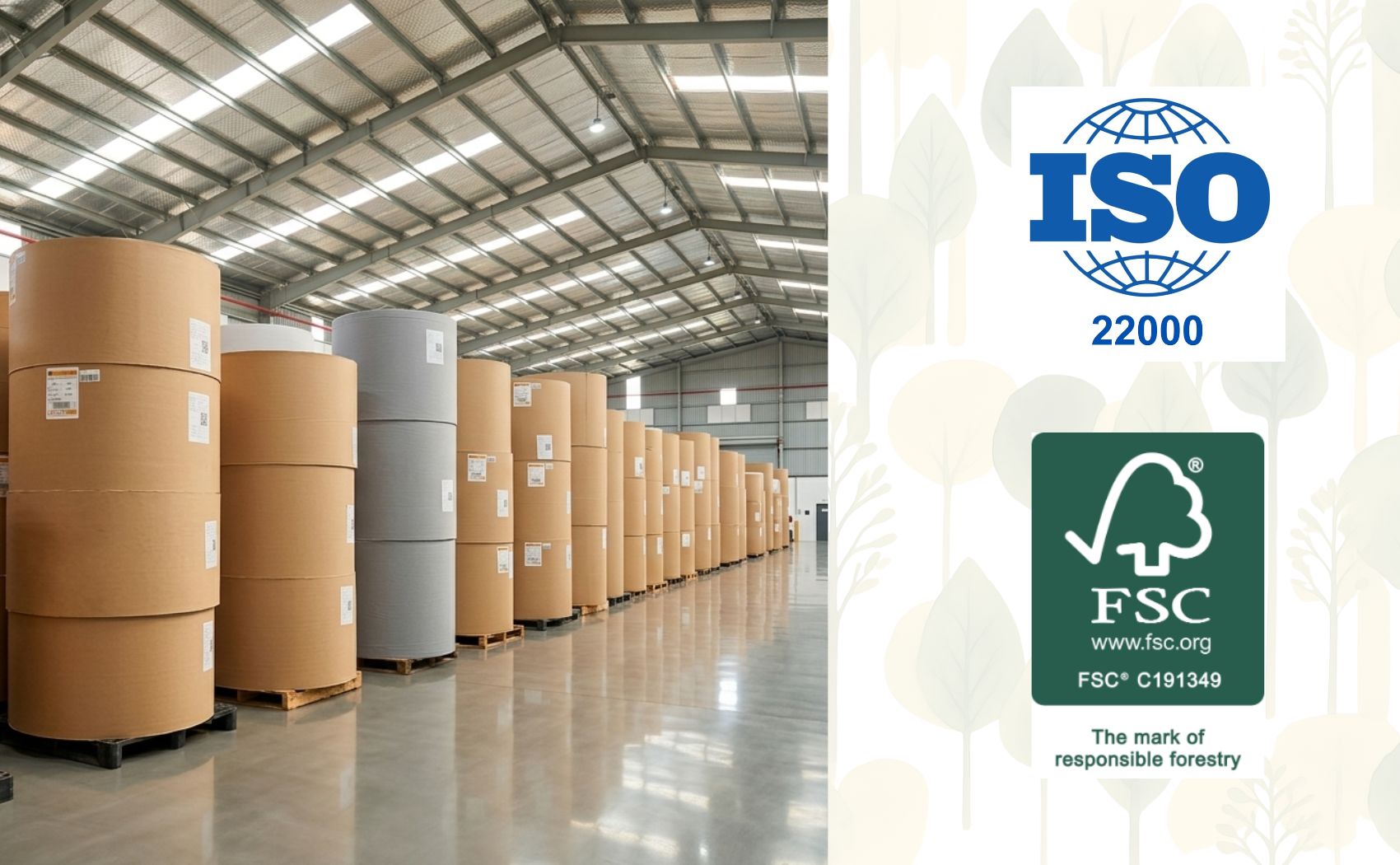
At Shun Fa, our consultants help you pick the right packaging paper types based on your specific product, budget, and brand goals. With over 20 years of experience and FSC and ISO 22000:2018 certifications, we’re committed to delivering the optimal packaging solution.
📞 Contact us for a free consultation and paper samples: 0903 006 114 🌐 See our ordering process here
If you love this theme, please share it with your friends.