A frozen food carton bound for the US or Europe solves a very different problem from dry-goods packaging. It sits at −18°C for months, travels in a refrigerated container, then lives in a retail freezer where moisture condenses on its surface every time a shopper opens the door. Choose the wrong board or the wrong glue and the carton softens at the edges, the side seam separates and the print loses its finish before the product ever reaches a customer.
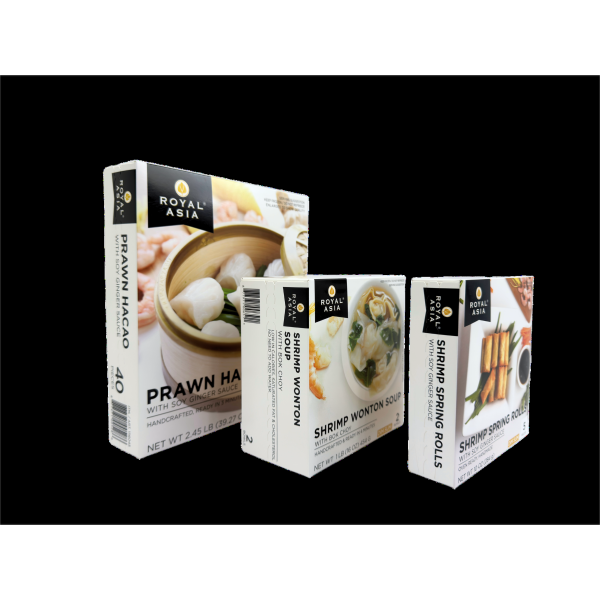
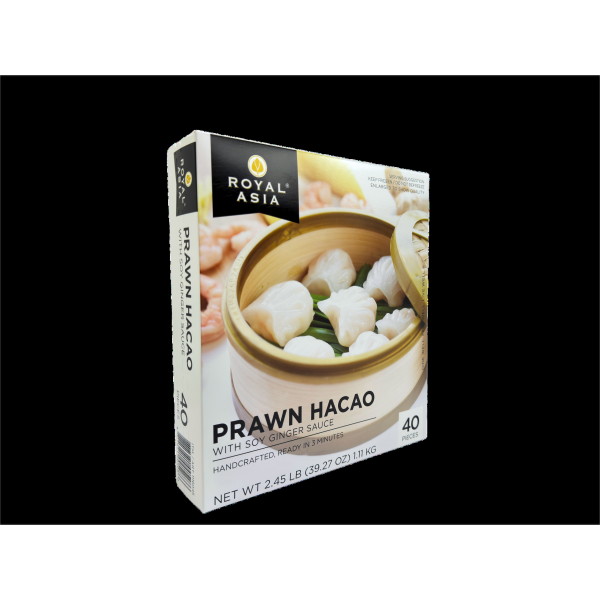
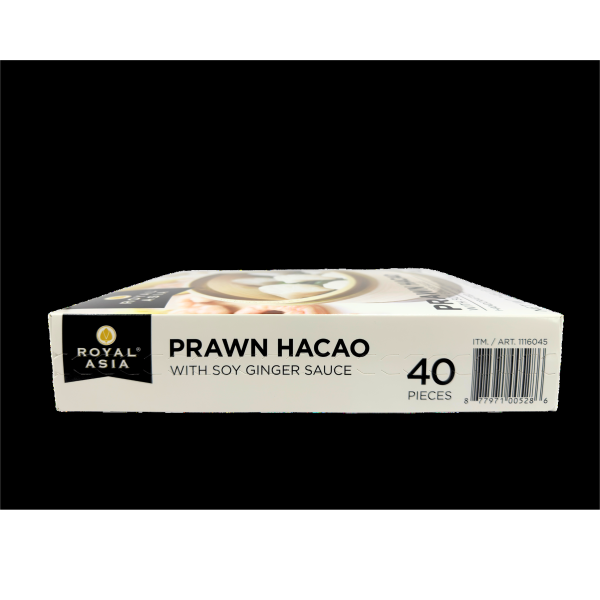
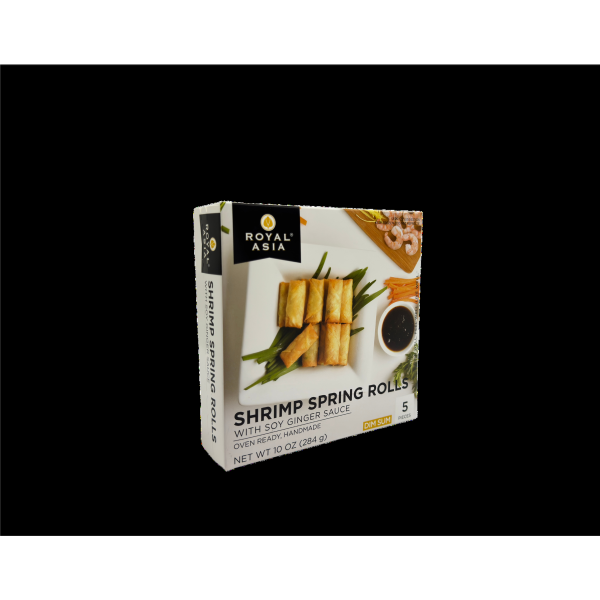
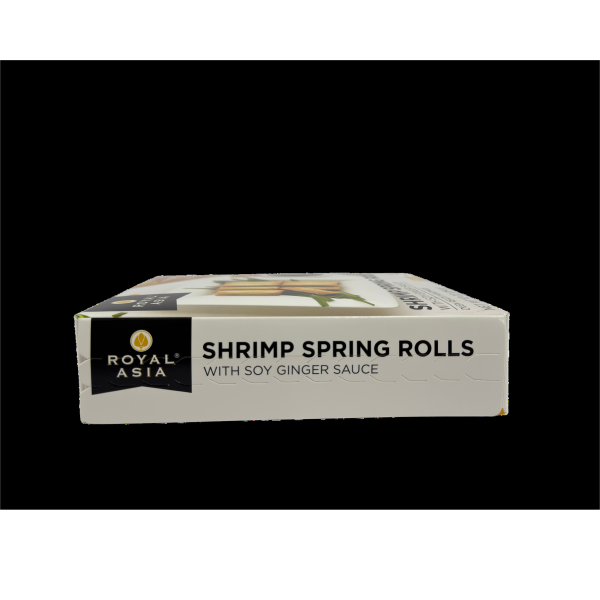
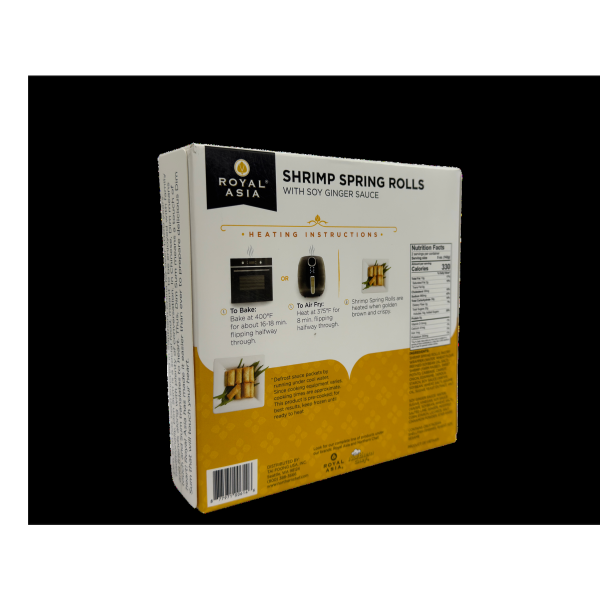
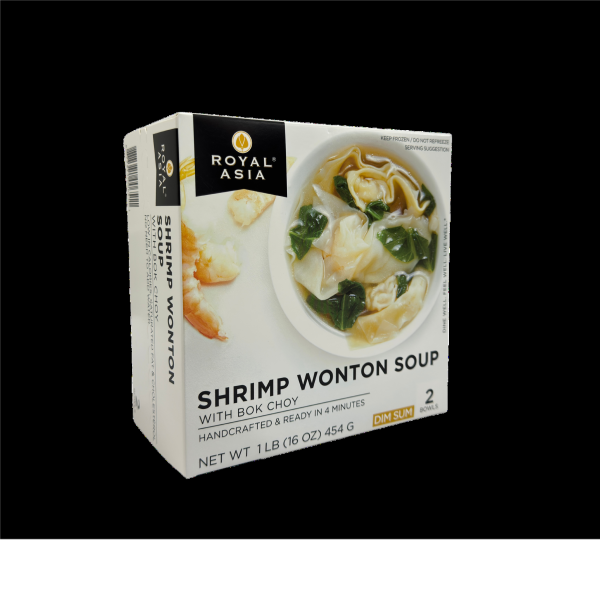
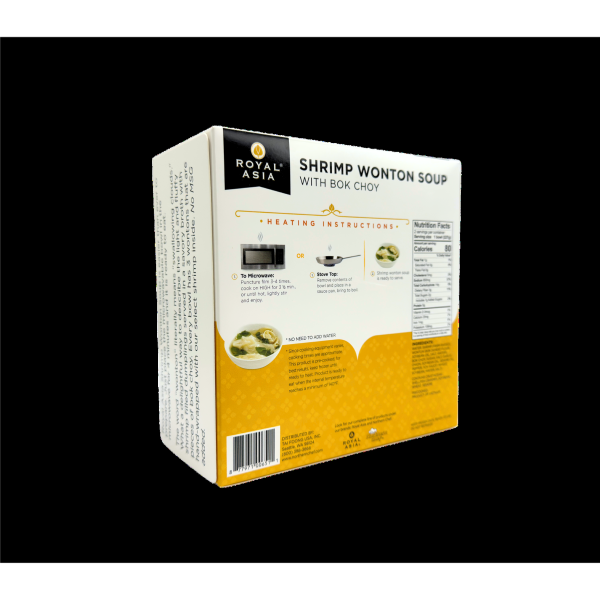
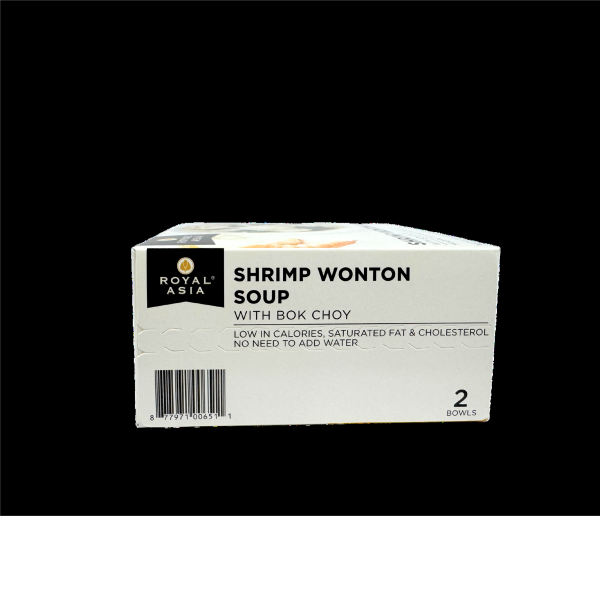
The cartons shown here were produced by Shunfa for the Royal Asia frozen range distributed through US retail, in three formats: Prawn Hacao dumplings (40 pieces), Shrimp Spring Rolls, and Shrimp Wonton Soup with bok choy (2 bowls). All three are folding cartons, offset printed across the full surface, finished with a moisture barrier and glued with a cold-resistant adhesive.
These cartons use high-grammage ivory board with a laminated print surface acting as a moisture barrier. Every time a freezer door opens, the pack goes through another condensation cycle; the film keeps the surface from absorbing water, prevents blistering, and preserves panel stiffness across many of those cycles.
For more demanding programmes we can move a frozen food carton to barrier-coated board, or add a protective coating along the crease lines — the first area to fail once a carton takes on moisture.
Standard carton adhesive turns brittle and loses tack as temperature drops. This is the single most common failure point in a frozen food carton, so the range uses a cold-resistant glue that bonds reliably to a laminated surface and holds at −18°C. Cutting and creasing depth is set so cartons erect quickly on automatic packing lines without cracking the board when cold.
In a retail freezer, shoppers decide in seconds based on the food photography. The full surface of each frozen food carton is offset printed, reproducing the golden tone of the broth, the green of the vegetables and the pink of the shrimp accurately, while holding the crisp edges of the logo block and the brand’s black-and-gold banding.
We print with inks suitable for food packaging, and control colour with a printed proof and Pantone matching before the run, so seasonal repeat orders match the previous batch.
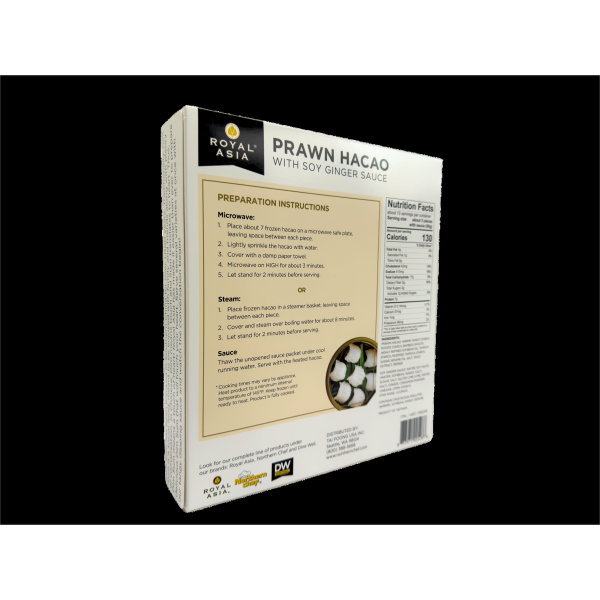
Food entering the US must carry a Nutrition Facts panel, ingredient list, allergen statement, preparation instructions, a “Keep Frozen / Do Not Refreeze” line, net weight in both LB/OZ and grams, a UPC barcode and the retailer’s ITM code. All of this is set in very small type, so the layout of a frozen food carton has to keep the text legible and the barcode scannable on the first pass at checkout.
Shunfa lays out each panel to the destination market’s labelling format and verifies barcode scannability on the proof before the production run.
Three things: the board must hold stiffness as it takes on moisture, the surface needs a barrier such as lamination or a coating, and the glue must be a cold-resistant grade that will not release at −18°C. A standard dry-goods carton softens at the edges and pops its seam in cold storage.
Yes. We prepare the dieline from your actual product dimensions, lay out each panel to the destination market’s labelling requirements, and check barcodes before the production run.
The plant holds ISO 22000:2018 and FSC certification and uses inks appropriate for food packaging. We supply certificates and technical documentation with each shipment for your export file.
Typically 5 days from approval of the sample carton and print file, with minimums from 5000 cartons depending on size and finishing. Offset runs become significantly more cost-efficient at volume.
Yes. As with the range shown here, three different formats were produced with matched board and brand colour so the whole line reads as one family on the shelf.
Alongside the frozen food carton range, Shunfa also produces export shipping cartons and premium rigid boxes. See our export-grade food carton project for another example.
US labelling requirements for imported food packaging are set out in the FDA food labelling guidance.